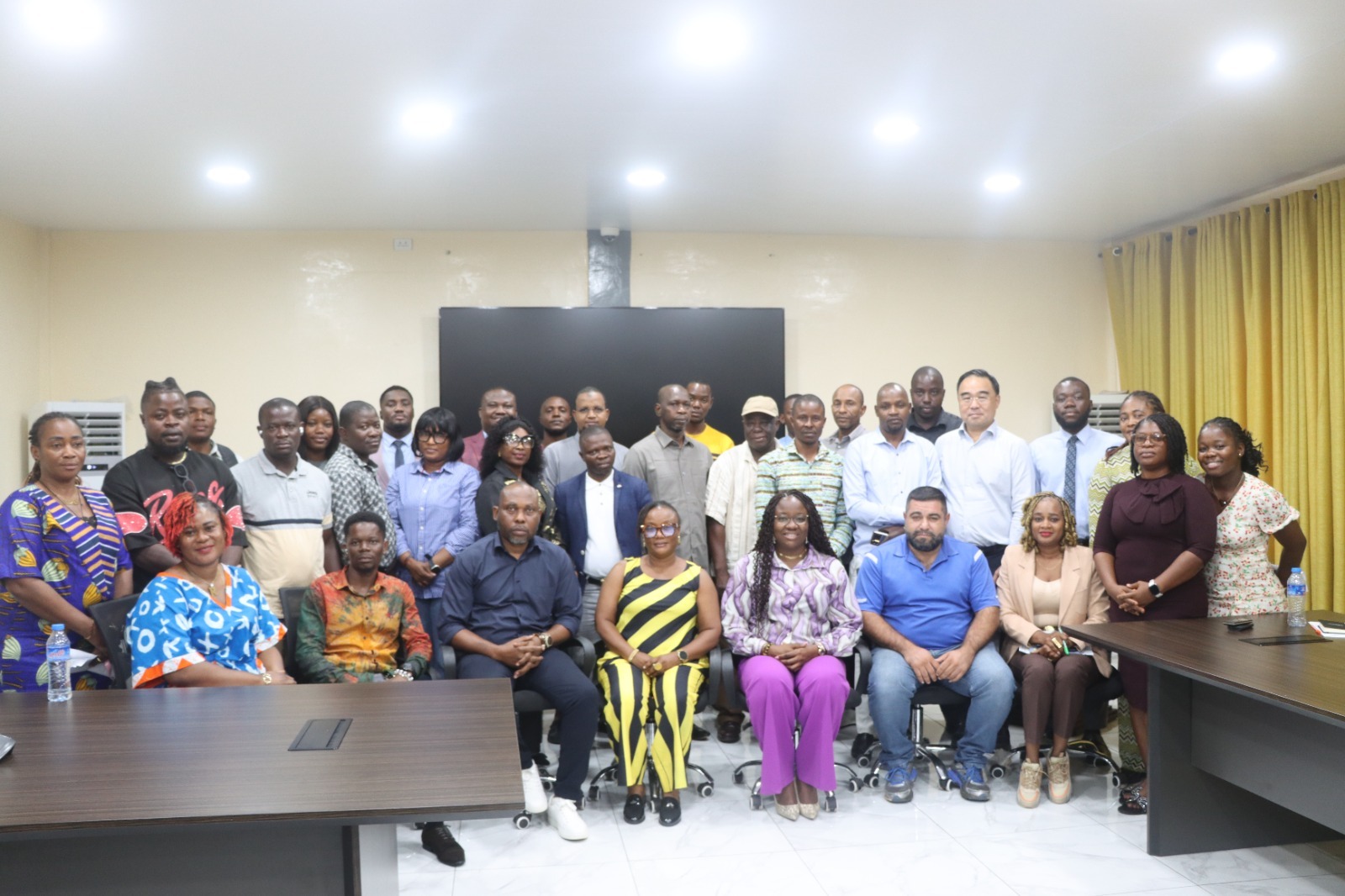
MONROVIA, August 16, 2026 — The Ministry of Mines and Energy, through its Office of Precious Minerals (OPM), has put into action, efforts aimed at promoting transparency, accountability, and responsible sourcing in Liberia’s gold sector by conducting a two-part training sessions intended to strengthen the capacity of licensed gold Dealers and Brokers to ensure they comply with traceability requirements.MONROVIA, August 16, 2026 — The Ministry of Mines and Energy, through its Office of Precious Minerals (OPM), has put into action, efforts aimed at promoting transparency, accountability, and responsible sourcing in Liberia’s gold sector by conducting a two-part training sessions intended to strengthen the capacity of licensed gold Dealers and Brokers to ensure they comply with traceability requirements.
The training, held separately at the Ministry’s central Monrovia head office on August 12, 2026, and the 14th, brought together two groups and was centered around the use of the gold traceability forms.
The initiative forms part of the Ministry’s broader efforts to formalize Liberia’s gold trade, improve documentation and record-keeping, curb illicit mineral transactions, and strengthen confidence in the country’s mineral sector.
Opening the dealers’ session, the Assistant Minister of Mines, Sumo Momolu, - underscored the Ministry's commitment to sanitizing the minerals sector and ensuring that gold traded in Liberia can be properly accounted for from the point of production to export.
Madam Rebecca Kumba Fallah, Director of the Office of Precious Minerals (OPM) – directly responsible for minerals trading/export and implementation of the Gold Traceability system - did a presentation on the importance and use of the Gold Traceability Forms. She emphasized on the importance of transparency and accountability in gold transactions and encouraged all participants to see the Gold Traceability not simply as a regulatory requirement, but an important mechanism for building a credible and internationally trusted gold industry.
At the heart of both sessions during her presentation, was the Gold Traceability Forms, which she described as a critical tool for establishing a reliable chain of custody for gold. Participants were taken through the various stages of documentation, including production records, purchase and transaction forms (vendor receipts), transportation records (DealersID Cards), export documentation, and supporting attachments.
Emphasis was placed on the documents required for lawful gold export, including a valid license, production and recovery vouchers, transaction receipts, identification where applicable, and other documents as prescribed by the Ministry (MME).
Following Director Fallah's presentation, a practical demonstration session was conducted by staff from the Office of Precious Minerals to ensure that each participant understand the features of the forms and how the forms should be completed.
The OPM staff guided participants through the process, stressing the need for clear handwriting, accurate information, complete entries, and proper verification of every transaction.
The participants were particularly reminded to carefully record the date, weight, location, mining information, and details of buyers and sellers, while ensuring that all required signatures are obtained before documents are submitted.
For Brokers, the training placed additional emphasis on their role as key actors in the gold supply chain. They were reminded to conduct transactions only with authorized/licensed miners, maintain proper records, and ensure that every movement of gold is supported by the required documentation.
The training session cautioned Dealers and Brokers against common documentation errors, including blank fields, missing signatures, inaccurate weights, inconsistent information, and late submission of forms.
Participants were further warned that dealing in minerals outside the established legal framework could result in seizure of the minerals and other legal consequences under Liberian law.
The sessions were interactive, with participants given opportunities to ask questions and seek clarification on practical challenges they encounter in their day-to-day operations. The discussions allowed the Ministry to reinforce key compliance requirements while giving Dealers and Brokers a clearer understanding of their respective responsibilities within the gold supply chain.
The two-day Stakeholders engagement comes at a time when Liberia is seeking to strengthen governance of its mineral resources and ensure that gold produced and traded in the country is properly documented and traceable.
By bringing Dealers and Brokers into the same traceability framework through targeted training, the Ministry says it is working to close documentation gaps and build a more transparent and accountable gold market—one in which every transaction can be followed, verified, and linked to its legitimate source.
The Ministry of Mines and Energy reaffirms that the training is part of an ongoing efforts to formalize the gold sector, enhance government oversight and support revenue collection, promote responsible sourcing, and position Liberia’s mineral industry to meet national and international standards for transparency and accountability.
The next group of people receive similar Gold Traceability training will be Mining Agents which will be conducted at the Ministry’s central Monrovia head office, while Miners will have theirs done at the county level.
MINISTRY OF MINES AND ENERGY-LIBERIA PUBLIC RELATIONS For additional informational about the Ministry, visit our Facebook page:https://www.facebook.com/profile.php?id=61573832151952PR Unit Contact: +231770902967