MONROVIA, LIBERIA – OCTOBER 2, 2026: The Government of Liberia, through the Ministry of Mines and Energy (MME), has officially launched a major initiative designed to strengthen the country’s climate action, improve energy efficiency, and accelerate the transition toward environmentally sustainable cooling technologies.
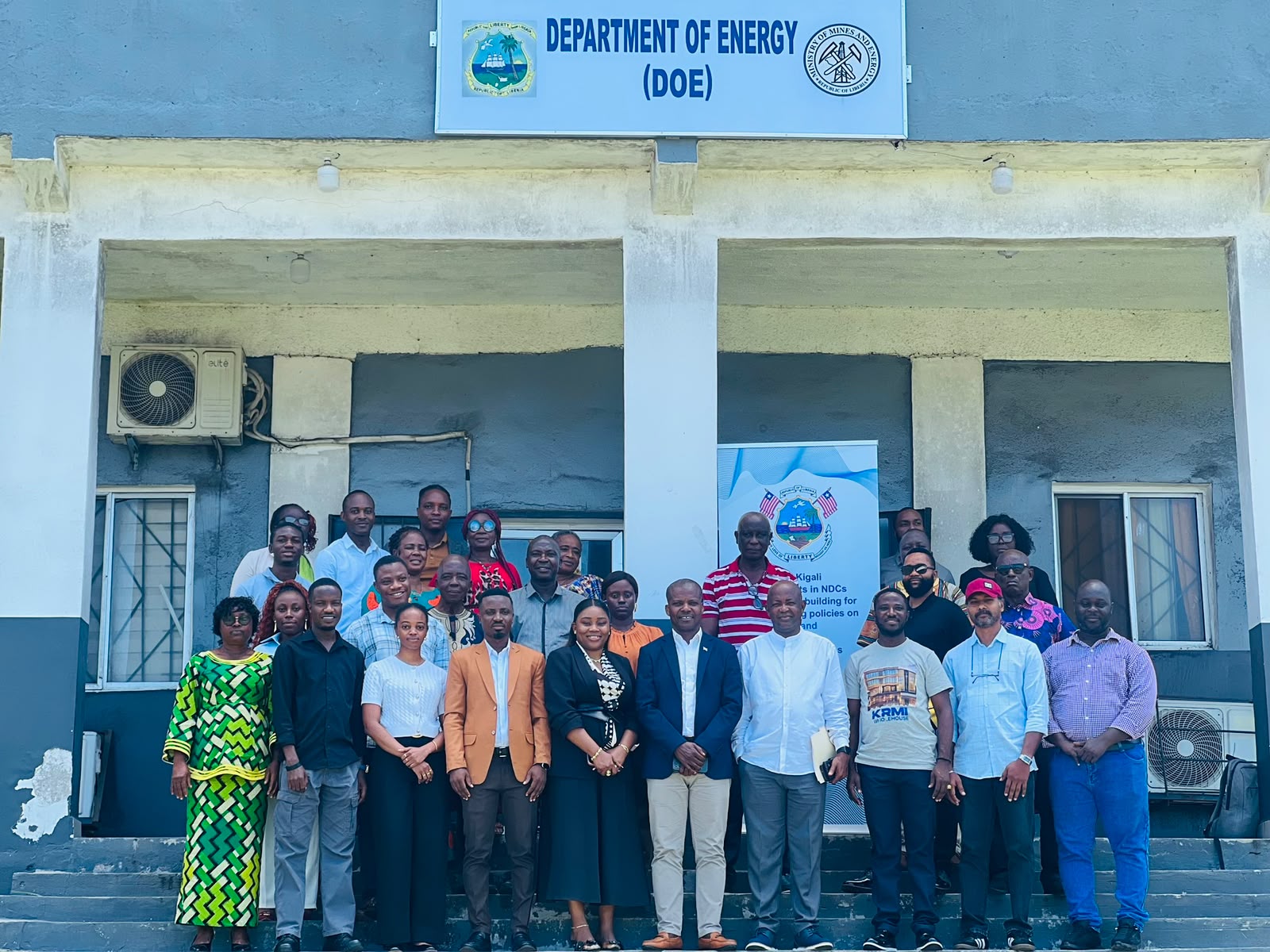
The initiative, titled “Integrating Kigali Commitments in NDCs and Capacity Building for Implementing Policies on Refrigerants and Energy Efficiency of Cooling Appliances in Liberia,” was launched Tuesday, September 29, 2026, during a high-level kickoff meeting held at the Ministry of Mines and Energy in Monrovia.
The project brings together key government institutions, private-sector actors, technical experts, and international development partners to strengthen Liberia’s capacity to develop and implement policies, standards, and systems that promote energy-efficient cooling appliances and the use of low-global-warming-potential (low-GWP) refrigerants.
The initiative is being supported by the Climate and Clean Air Coalition (CCAC) and the United Nations Environment Programme (UNEP) United for Efficiency (U4E) initiative, in collaboration with the Government of Liberia through the Ministry of Mines and Energy and the Environmental Protection Agency (EPA).
Government Reaffirms Commitment to Energy Efficiency:
Opening the kickoff meeting, Assistant Minister of Energy Oliver S. Gbegbe reaffirmed the Government of Liberia’s commitment to advancing energy efficiency and integrating obligations under the Kigali Amendment into the country’s national climate and energy strategies.
Minister Gbegbe officially launched the project and called on participating institutions and stakeholders to actively contribute to its successful implementation.
He emphasized that effective collaboration will be essential in addressing the policy, technical, regulatory, institutional, and market challenges confronting Liberia’s cooling sector.
Representing the Environmental Protection Agency, Benjamin Karmorh, Chief Technical Advisor and Liberia’s UNFCCC Focal Point, underscored the project’s significance to Liberia’s Nationally Determined Contributions (NDCs).
Mr. Karmorh acknowledged the longstanding support of UNEP, including its contribution to Liberia’s ratification of the Kigali Amendment, while drawing attention to the environmental risks associated with hydrofluorocarbons (HFCs).
He reaffirmed the EPA’s commitment to working closely with MME and other stakeholders to ensure the successful implementation of the initiative.
International Partners Pledge Continued Support:
International development partners also expressed strong support for Liberia’s climate-smart cooling agenda.
Mohamed Atani, Head of the UNEP West Africa Office, highlighted the project’s contribution to broader ECOWAS energy-efficiency objectives, while Denise San Valentine of the CCAC Secretariat reaffirmed the Coalition’s commitment to supporting Liberia’s transition toward more energy-efficient and climate-friendly cooling solutions.
Patrick Blake, UNEP U4E Program Manager, thanked the Government of Liberia and the EPA for their partnership and expressed optimism that the initiative would produce meaningful results for Liberia’s cooling and energy-efficiency sector.
Three-Pronged Approach to Transform Cooling Sector:
The project will pursue a three-pronged approach aimed at addressing institutional, regulatory, technical, and market challenges within Liberia’s cooling sector.
The initiative will:
1. Strengthen stakeholder capacity and institutional systems to support the development and implementation of effective cooling-sector policies;
2. Support the implementation of Minimum Energy Performance Standards (MEPS), appliance labeling, and Monitoring, Verification and Enforcement (MVE) systems to improve the efficiency and compliance of cooling appliances entering and operating in the Liberian market; and
3. Establish a national exchange and coordination platform to strengthen collaboration among policymakers, regulators, businesses, development partners, technical experts, and other stakeholders in the cooling sector.
MME Highlights Challenges and Opportunities:
Delivering a presentation on Liberia’s national policy context, Joebarline Gbozee, Director of Energy Planning and Research at the Ministry of Mines and Energy, outlined the country’s existing energy and environmental policy landscape and identified areas where the project can support national climate and energy priorities.
Director Gbozee identified several challenges confronting the sector, including limited electricity-grid coverage, aging energy infrastructure, high electricity costs, expensive imported appliances, weak enforcement of standards and labeling requirements, limited public awareness of energy-efficient technologies, and inadequate technical capacity for product testing and compliance.
Despite these challenges, she highlighted significant opportunities for transforming Liberia’s appliance market through stronger regulatory systems, institutional capacity building, increased private-sector participation, and improved access to energy-efficient cooling technologies.
She also called for stronger regulatory and enforcement capacity, the establishment of national standards and labeling systems, improved inter-agency coordination, and the development of financing mechanisms capable of encouraging consumers and businesses to adopt energy-efficient appliances.
Among the institutions identified for strengthened coordination were the Environmental Protection Agency (EPA), Liberia Standards Authority (LiSA), Public Procurement and Concessions Commission (PPCC), Rural and Renewable Energy Agency (RREA), Liberia Electricity Corporation (LEC), Liberia Institute of Statistics and Geo-Information Services (LISGIS), and the Ministry of Commerce.
Private Sector to Play Critical Role:
During the question-and-answer session, stakeholders examined the role of the private sector in advancing Liberia’s cooling-efficiency agenda.
Participants emphasized that businesses should not only participate in policy discussions but should also contribute actively to the development and implementation of the national policy framework.
International project presenters, including Soledad Garcia and Mzwandile Thwala, provided an overview of the project framework, planned activities, deliverables, and expected results, with emphasis on capacity development, MEPS, labeling and MVE systems, and the establishment of a national coordination platform.
The project is expected to run through April 2028.
Further discussions led by P. Nanlee Johnson focused on the project’s institutional arrangements, including the proposed establishment of a Policy Working Group to support the development of Liberia’s national cooling-efficiency policy.
Participants were also introduced to the project’s market assessment and data requirements, which will include product technical information, market share, product-use patterns, macroeconomic and social data, as well as environmental information related to refrigerants and emissions.
Stakeholders raised questions concerning the scope of data collection, including demand-side information, public benefits, the inclusion of hospitals, and whether the initiative would extend beyond air conditioners and refrigerants to encompass the broader cooling-appliance market.
Industry Stakeholders Welcome Initiative:
The Razouk Brothers, identified as a major importer of cooling appliances, were commended for their cooperation and support, particularly their collaboration with the Liberia Standards Authority in promoting standards and compliance within the sector.
Mission 300 Compact Fellows also welcomed the initiative, noting its alignment with Liberia’s efforts to advance the Mission 300 agenda and expand access to reliable and sustainable energy.
In closing, Kelvin Grugbaye, Mission 300 Compact Fellow and Head of the CDMU at the Ministry of Mines and Energy, commended the organizers and participating stakeholders for initiating the project.
He stressed the initiative’s relevance to Liberia’s energy-transition priorities and its potential contribution to the objectives of Mission 300.
Meanwhile, Norwu Harris, NDC Partnership Focal Person at the EPA, emphasized the importance of moving beyond climate commitments toward practical implementation.
She underscored the critical role of the private sector in translating policy objectives into tangible improvements across Liberia’s cooling and energy-efficiency market.
A Step Toward a Sustainable Cooling Future:
The kickoff meeting, which commenced at 10:30 a.m. and concluded at 2:00 p.m., ended with a shared commitment among government institutions, development partners, regulators, businesses, and technical stakeholders to work collectively toward a more efficient, climate-friendly, and sustainable cooling sector.
The initiative represents another step in Liberia’s efforts to translate its international climate commitments into practical national action while creating the policy, technical, regulatory, and market conditions necessary to promote energy efficiency, cleaner refrigerants, stronger standards, and sustainable cooling solutions across the country.
The Ministry of Mines and Energy looks forward to continued collaboration with all stakeholders as Liberia advances implementation of its climate and energy priorities and strengthens the foundation for a more energy-efficient and environmentally sustainable future.
MINISTRY OF MINES AND ENERGY-LIBERIA PUBLIC RELATIONS
For additional informational about the Ministry, visit our Facebook page:
https://www.facebook.com/profile.php?id=61573832151952
PR Unit Contact: +231770902967