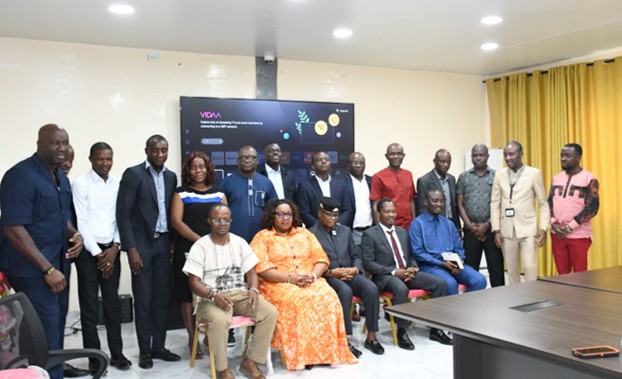
MONROVIA, LIBERIA — OCTOBER 26, 2026: The Government of Liberia has officially launched the Formalization of Artisanal and Small-Scale Mining for Peace and Security (FASMIN) Project in Monrovia.
Officially launched on the 26th of October, 2026, Monday, at the Ministry's head-office, the FASMIN Project is aimed at curbing illegal mining, strengthening regulatory oversight, improving miners’ livelihoods, and increasing national revenue from the country’s mineral resources by formalizing their mining operations.
The project is a joint initiative of Liberia and Sierra Leone, supported by a US$2 million grant from the African Development Bank Group (AfDB) with US$1 million allocated to Liberia for implementation.
Speaking on behalf of Mines and Energy Minister, R. Matenokay Tingban, the Deputy Minister for Administration, Eudora Blay-Pritchard, declared the project 'officially launched'. Specific mentions in her keynote address included describing the FASMIN Project as a significant step toward building a safer, more transparent, inclusive, and environmentally responsible artisanal and small-scale mining sector.
Deputy Minister Blay-Pritchard pointed out that the Government’s appreciation to the African Development Bank and the African Development Fund for their support remains immeasurable, noting that artisanal and small-scale mining provides livelihoods for thousands of Liberians, particularly in rural communities where formal employment opportunities can be sometimes challenging.
However, she stressed that the sector’s largely informal nature continues to expose miners to unsafe working conditions, limited access to financing, inadequate legal protection, and restricted market opportunities. "It also limits the Government’s ability to collect revenue from mineral extraction and trade," she intimated.
Deputy Minister Blay-Pritchard also noted: "The government’s position is clear; formalization must protect miners, improve their livelihoods, strengthen our institutions, and ensure that Liberia benefits fairly from its mineral wealth, with sound environmental stewardship.
THREE STRATEGIC PILLARS
The FASMIN Project will be implemented through three strategic components: strengthening regulatory institutions, formalizing artisanal and small-scale mining operations, and ensuring effective project coordination and management.
Under the institutional capacity-building component, the project will support the Ministry of Mines and Energy and relevant environmental institutions in strengthening enforcement, improving field monitoring, and promoting responsible mineral resource management. Planned interventions include digitizing administrative and technical procedures, improving field data collection, and providing information and communications technology equipment and modern monitoring tools.
The formalization component will help miners obtain the appropriate licenses, organize into cooperatives, improve extraction methods, and transition into the formal economy. It will also promote access to training and financing, strengthen environmental and occupational health and safety practices, encourage mercury-free mineral processing where feasible, and expand opportunities for women, young people, and other vulnerable groups in mining communities.
The third component will focus on project coordination, monitoring, accountability, and the transparent management of resources to ensure effective implementation and the achievement of measurable results.
Providing an overview of the initiative, Deputy Minister for Planning, Research and Development, Fahnseth B. Mulbah, Chairman of the FASMIN Steering Committee, outlined the project’s implementation framework inclusive of its potential to address longstanding regulatory, environmental, and socioeconomic challenges within Liberia’s artisanal and small-scale mining sector.
Representing the African Development Bank, Jeffrey Kwame Ahadie, speaking on behalf of the Bank’s Country Manager, reaffirmed the importance of the partnership in strengthening mineral resource governance and improving the livelihoods of mining communities.
Representatives of the project’s Steering Committee, the Mineral Sector Working Group, and the Ministry of Finance also underscored the importance of institutional coordination and sustained commitment to achieving the project’s objectives.
LIBERIA TARGETS 500 LICENSED OPERATORS, 15 COOPERATIVES BY 2028
By the end of 2028, Liberia aims to increase the number of licensed artisanal and small-scale mining operators from 300 to 500, establish 15 formalized mining cooperatives, and train at least 500 mining operators and 150 regulatory personnel, envisaged by the Ministry of Mines and Energy in its 5-year Strategic Plan.
The project will also seek to improve compliance with environmental, health, and safety standards, reduce work-related injuries, prevent child labor, promote the rehabilitation of mined-out areas, and increase government revenue from the sector.
These targets are expected to contribute to stronger regulatory compliance, improved working conditions, more responsible mining practices, and greater participation of small-scale operators in Liberia’s formal economy.
GOVERNMENT PLEDGES TRANSPARENCY AND ACCOUNTABILITY Deputy Minister Blay-Pritchard cautioned that the project’s success would depend on more than its official launch. She emphasizing the need for sustained collaboration among government institutions, development partners, mining operators, cooperative leaders, traditional authorities, and affected communities.
She stressed that transparent procurement, regular monitoring, financial audits, and strict adherence to integrity standards must guide implementation, warning against corruption, unofficial fees, and the misuse of project resources.
The Deputy Minister also encouraged miners and cooperative leaders to embrace formalization, urged women and young people to take advantage of emerging opportunities, and called on traditional leaders and mining communities to support peaceful cooperation with regulatory authorities.
TOWARD A MORE RESPONSIBLE MINING SECTOR
The launch of FASMIN represents a renewed commitment by the Government of Liberia and its development partners to transform artisanal and small-scale mining into a more regulated, productive, and inclusive sector.
Through improved institutional capacity, legal formalization, environmental protection, and stronger community participation, the initiative seeks to ensure that mining activities contribute more meaningfully to employment creation, public revenue, and sustainable national development.
Ultimately, the project’s success will be measured not only by the number of licenses issued, cooperatives established, or personnel trained, but also by the impact it will make on miners’ livelihoods, environmental protection, public institutions, and the economic well-being of communities across Liberia.
Relevant government institutions associated with implementation of the FASMIN Project made representations at Monday's official Launch and assure the Mines and Energy Ministry and the Donor partner of their preparedness to work assiduously to make the project successful.
Madam Kpambul Turay spoke on behalf of the Project Financial Management Unit (PFMU) of the Finance and Development Planning Ministry, while Abraham Gappie did similarly for the Association of Artisanal and Small-scale Miners, and for the Liberia Extractive Industries Transparency Initiative (LEITI), their statement of ensuring that FASMIN succeeds was made by the Head of Secretariat, Jeffery Yates.
Benedict Quato from the Department of Operations of the Ministry of Mines and Energy is the Coordinator of the FASMIN Project. He will work closely along with stakeholders and steering committee members to ensure that programs and activities outlined in the project's objectives are met before the December 31, 2028 wind down deadline.
MINISTRY OF MINES AND ENERGY-LIBERIA PUBLIC RELATIONS
For additional informational about the Ministry, visit our Facebook page:
https://www.facebook.com/profile.php?id=61573832151952
PR Unit Contact: +231770902967