
MINES AND ENERGY MINISTRY, MILLENIUM CHALLENGE CORPORATION, HOLD TALKS ON ELECTRICITY SECTOR GOVERNANCE REFORMS
... TO BOOST PRIVATE INVESTMENT IN LIBERIA
MONROVIA, LIBERIA – October 13, 2026: Discussions aimed at boosting private sector investment and reforming Liberia’s electricity sector have taken place between the Mines and Energy Ministry and the Millennium Challenge Corporation (MCC).
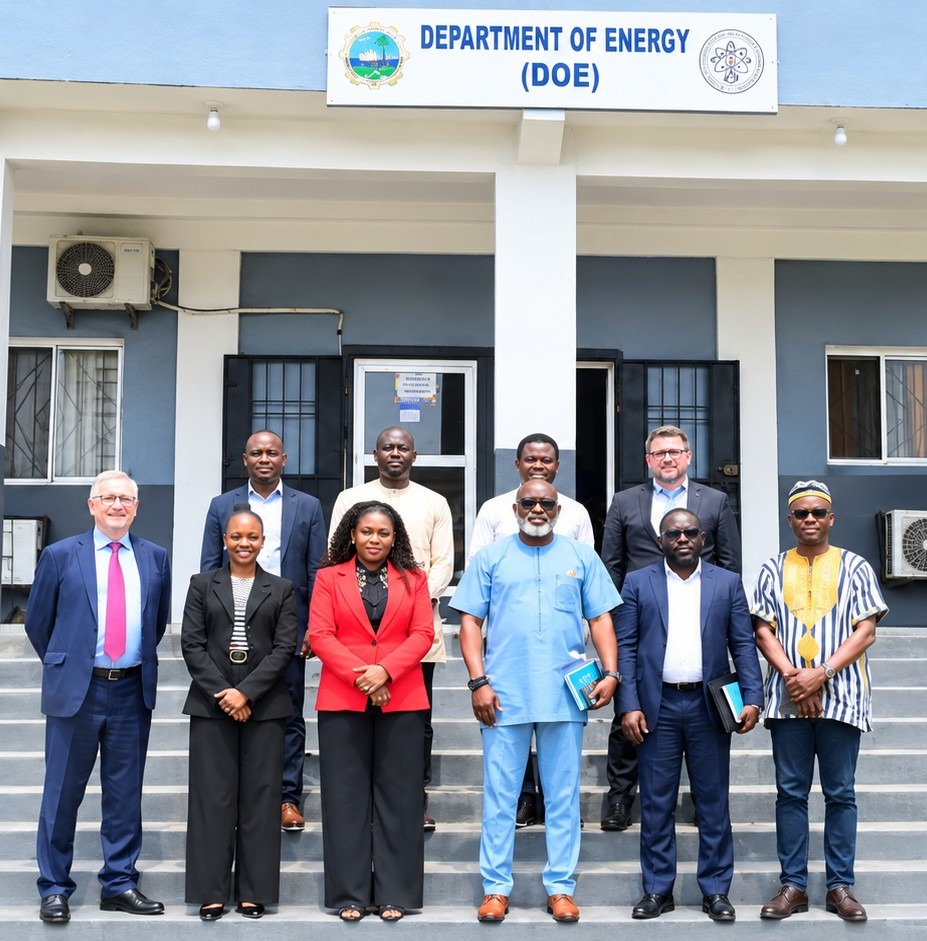
The high-level roundtable was convened at the Ministry’s central Monrovia head-office on 12th October, 2026, with dignitaries from the MCC, officials of the Ministry (MME), and Liberia’s Compact Development Team (CDT) participating. The discussions were centered around proposed electricity sector governance reforms focusing on strengthening institutional capacity, improving sector performance, and creating an enabling environment for increased private-sector investment in electricity generation and distribution.
This effort forms part of an MCC-CDT mission scheduled for October 12–16, 2026. The mission is supporting an Options and Readiness Study intended to identify practical reform pathways to guide improvements in Liberia’s electricity sector governance and enhance the sector’s readiness for greater private-sector participation.
The engagement brought together the Deputy Minister for Energy, Charles Umehai; Assistant Minister for Energy, Oliver S. Gbegbe; Director of Energy Planning, Research and Policy, Madam. Joebarline Gbozee; Director for Electricity and Renewable Energy, C’Kor B. Guzeh, Acting Technical Assistant to the Deputy Minister, Wilfred Q. Kpaingbaye, Mission 300 Fellow from the Compact Delivery and Monitoring Unit (CDMU), Sharon Matongo, and Representatives of the MCC and CDT.
The Deliberations strategically looked at the Ministry’s policy priorities, reform objectives, institutional responsibilities, and key challenges affecting private-sector participation in the electricity sector of Liberia. The teams examined existing institutional and policy bottlenecks requiring targeted interventions and accelerated reforms, with particular emphasis on the status of the National Energy Policy (NEP) which remains a critical framework for advancing planned reforms and providing strategic direction for the sector’s development.
Deputy Minister Umehai emphasized the importance of strengthening Liberia’s national energy planning framework to support long-term development, improve institutional coordination, and attract sustainable investment. The Deputy Energy Minister highlighted the need for an Integrated National Energy Master Plan to provide a comprehensive roadmap for the country’s energy development, ensuring that policy priorities, infrastructure investments, and sector-wide initiatives are aligned with long-term development objectives.
Umehai also underscored the importance of developing a Nuclear Energy Law as part of broader efforts to strengthen the country’s energy policy and legislative framework. Such efforts, he noted, would contribute to establishing a more comprehensive foundation for energy-sector planning, regulation, and future development.
The Ministry further highlighted the need to strengthen the technical capacity of its personnel to respond effectively to the rapidly evolving, technology-driven energy landscape. Building institutional expertise, improving technical competencies, and enhancing operational efficiency were identified as important considerations for ensuring that the Ministry can effectively execute its regulatory, policy, and planning responsibilities.
The Discussions also addressed logistical and operational constraints confronting the Compact Delivery and Monitoring Unit in collecting field data necessary for effective planning, monitoring, and implementation. Participants emphasized the need for additional support to enhance the unit’s operational capacity, improve access to reliable field information, and strengthen its ability to deliver on its mandate.
The MCC and CDT are expected to use insights gathered during the consultations to develop an outline of potential reform pathways for consideration by the Government of Liberia. The proposed options will assess institutional and implementation readiness, identify priority areas for intervention, and recommend an appropriate sequence for implementing reforms designed to improve electricity sector governance and encourage greater private investment in electricity generation and distribution.
The findings and proposed reform pathways are expected to be presented during a subsequent mission tentatively scheduled for November 2026. The presentation will provide the Government of Liberia with an opportunity to review the proposed options, assess their suitability within the country’s institutional and policy context, and select the approaches best aligned with national electricity sector priorities.
The engagement reinforces the importance of sustained collaboration between the Government of Liberia and its development partners in advancing practical, evidence-based, and sustainable reforms. Through these consultations, the Ministry of Mines and Energy seeks to strengthen electricity sector governance, improve institutional effectiveness, and support the development of a more transparent, efficient, and investment-friendly electricity sector capable of meeting Liberia’s growing energy needs.
MINISTRY OF MINES AND ENERGY-LIBERIA PUBLIC RELATIONS
For additional informational about the Ministry, visit our Facebook page:
https://www.facebook.com/profile.php?id=61573832151952
PR Unit Contact: +231770902967
MINISTRY OF MINES AND ENERGY